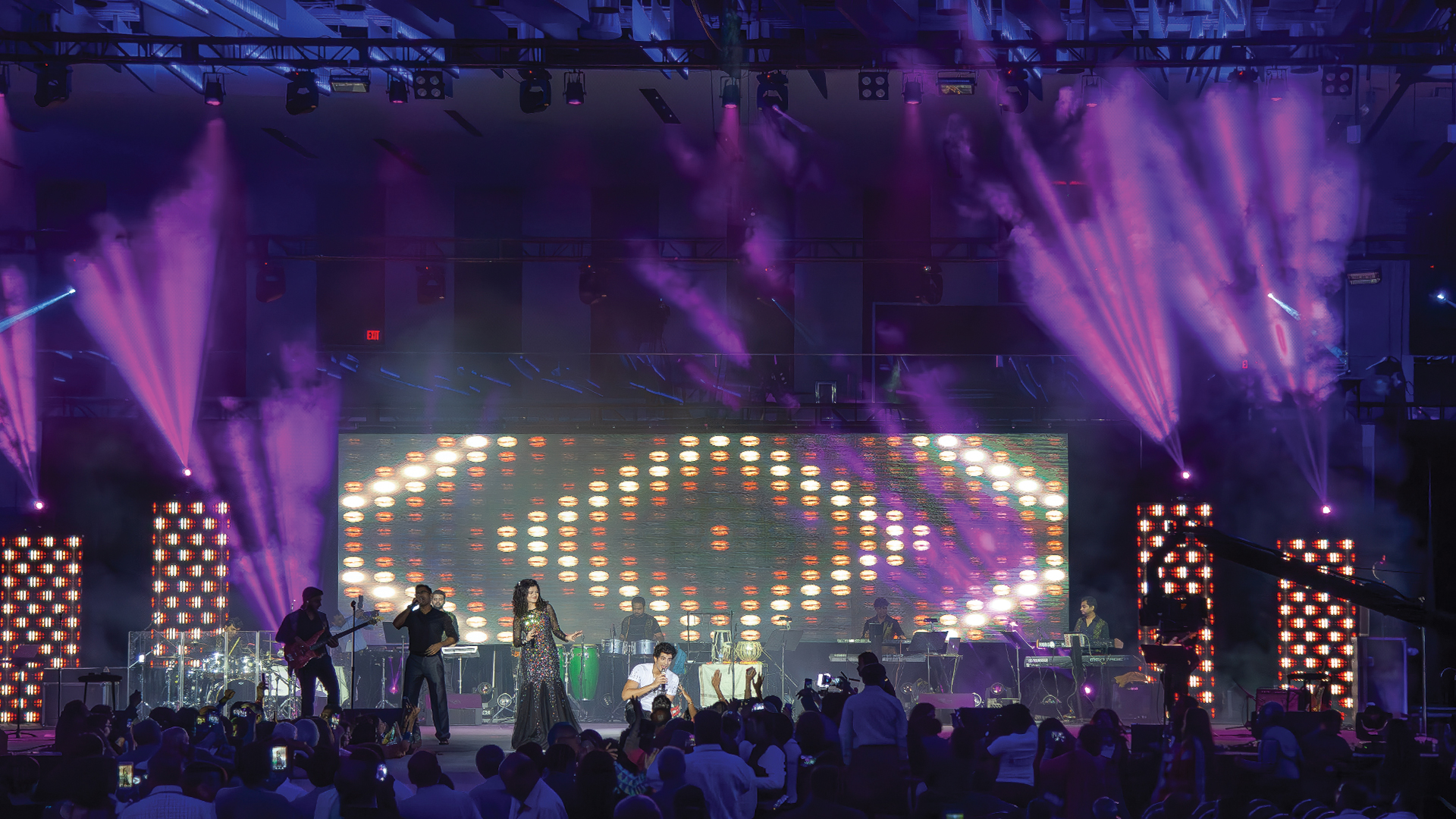
Great sound at live events depends on far more than powerful speakers and skilled engineers. The invisible interaction between sound waves and physical environments determines whether audiences experience clear, immersive audio or muddy, fatiguing noise. Understanding acoustic principles transforms average sound into exceptional experiences.
How Sound Behaves in Enclosed Spaces
Sound travels through air as pressure waves, moving outward from sources at approximately 1,130 feet per second at room temperature. When these waves encounter surfaces, three things happen simultaneously: some energy reflects back into the room, some energy transmits through the surface, and some energy converts to heat through absorption. The balance between these behaviors shapes how we perceive sound in any space.
Hard, smooth surfaces like concrete, glass, and drywall reflect most sound energy with minimal absorption. This creates echoes and reverberation as sound bounces repeatedly around a room before decaying. Soft, porous materials like fabric, foam, and fiberglass absorb sound energy, converting it to tiny amounts of heat and reducing reflections. Room acoustics depend on the quantity, placement, and absorptive properties of all surfaces the sound encounters.
Reverberation Time and Its Impact
Reverberation time, measured as RT60, describes how long sound takes to decay by 60 decibels after a source stops producing it. A large cathedral might have an RT60 of 5 to 8 seconds, creating the lush, blended sound associated with choral music. A professional recording studio typically targets RT60 below 0.3 seconds for precise monitoring without coloration from room reflections.
Event spaces fall somewhere between these extremes, with optimal reverberation depending on program material. Speech requires shorter reverberation times, typically 0.5 to 0.8 seconds, to maintain intelligibility. Music benefits from longer reverb, around 1.0 to 1.5 seconds for most popular genres. Multipurpose venues face the challenge of achieving acceptable acoustics for both applications, often through adjustable acoustic treatments.
The Problem of Standing Waves
When sound waves reflect between parallel surfaces, they can reinforce or cancel at specific positions based on wavelength. These standing waves, also called room modes, create dramatic variations in bass response throughout a space. At some locations, bass frequencies are unnaturally loud; a few feet away, those same frequencies nearly disappear. This phenomenon explains why bass sounds different depending on where you stand in a room.
Room dimensions determine the frequencies affected by standing waves. A room 40 feet long creates a fundamental mode at approximately 28 Hz, with harmonic modes at 56 Hz, 84 Hz, and so on. Rooms with dimensions that share common factors concentrate multiple modes at the same frequencies, creating severe peaks and nulls. Professional acoustic design uses ratios like 1:1.4:1.9 between height, width, and length to distribute modes more evenly across frequencies.
Early Reflections and Comb Filtering
Sound arriving at a listener’s position includes direct sound from the source plus reflected sound from surfaces. When reflected sound arrives within approximately 30 milliseconds of direct sound, the brain cannot separate them, creating comb filtering. This effect causes certain frequencies to boost while others cancel, based on the time difference between arrivals. The result is a hollow, phasey quality that reduces clarity.
Strong early reflections from side walls, ceilings, and floors degrade sound quality more than later-arriving reverberant energy. Controlling these reflections through absorption or diffusion at first reflection points is one of the most effective acoustic treatments. Absorptive panels at these locations reduce comb filtering while maintaining appropriate overall reverberation in the space.
Absorption Versus Diffusion
Acoustic treatment using absorption reduces reflected energy and shortens reverberation time. However, excessive absorption creates dead-sounding spaces where music lacks liveliness and speech sounds unnaturally dry. Professional acoustic design balances absorption with diffusion, which scatters reflected sound in multiple directions rather than eliminating it.
Diffusers maintain acoustic energy in a room while preventing focused reflections that cause comb filtering. Quadratic residue diffusers and other mathematical designs scatter sound across a wide frequency range based on well depths calculated from prime number sequences. Effective diffusion creates a sense of spaciousness and envelopment without the clarity-reducing effects of specular reflections.
Bass Trapping for Low-Frequency Control
Low frequencies present unique acoustic challenges because their long wavelengths require correspondingly large absorptive treatments. A 100 Hz wave is approximately 11 feet long, meaning thin foam panels effective at high frequencies have negligible impact on bass. Effective bass trapping requires substantial air gaps, dense absorptive materials, or resonant structures tuned to problematic frequencies.
Corner-mounted bass traps work effectively because low-frequency pressure is highest where walls meet. Porous absorbers spanning the full height of corners provide broadband bass absorption. Membrane absorbers and Helmholtz resonators offer frequency-specific control for particularly problematic modes. Combining multiple bass trap types addresses the broad range of low-frequency issues typical in event spaces.
Speaker Placement and Room Interaction
Where speakers are positioned relative to room boundaries dramatically affects their low-frequency output. Placing a speaker against a wall increases bass output by approximately 3 dB compared to free-standing placement. Corner placement adds another 3 dB. This boundary gain can be useful for extending bass response from smaller systems but also excites room modes more strongly, potentially worsening standing wave problems.
Subwoofer placement offers particular flexibility because humans cannot localize bass frequencies below approximately 80 Hz. Multiple subwoofers placed strategically around a room can smooth bass response through constructive and destructive interference that reduces standing wave effects. Cardioid subwoofer arrays using delay and polarity manipulation reduce bass energy behind the stage while maintaining full output toward the audience.
The Role of Room Size and Shape
Larger rooms generally present fewer acoustic challenges than smaller ones because modes are more densely spaced and reflections travel longer distances before returning to listeners. Rooms smaller than about 1,500 cubic feet are particularly difficult because widely-spaced modes create significant peaks and nulls that are hard to treat effectively.
Non-rectangular room shapes can reduce standing wave problems by preventing the parallel surface pairs that create the strongest modes. Angled walls, splayed surfaces, and curved elements introduce geometric diffusion while reducing modal behavior. However, unusual shapes can create focusing effects where concave surfaces concentrate sound at specific points, requiring careful design to avoid creating new problems while solving others.
Electronic Room Correction
Digital signal processing offers tools for addressing acoustic problems that cannot be solved through physical treatment alone. Room correction systems use measurement microphones to analyze frequency response, decay characteristics, and arrival times throughout a space. Equalization, delay, and filtering compensate for room-induced problems while preserving the natural character of source material.
Modern line array systems incorporate sophisticated processing that shapes coverage patterns and frequency response based on venue geometry. Beam steering electronically aims sound energy toward audience areas while reducing output toward reflective surfaces. The combination of physical acoustic treatment with electronic correction achieves results impossible through either approach alone.
Practical Applications for Event Spaces
Temporary event spaces like hotel ballrooms and convention halls present unique challenges because acoustic treatment is limited and varies significantly between venues. Portable acoustic panels, pipe and drape systems, and strategic speaker placement help manage the worst problems. Understanding the acoustic issues specific to each venue enables sound engineers to plan appropriate solutions.
For permanent installations, professional acoustic analysis identifies problems and guides treatment design. Even modest investments in appropriately placed absorption and bass trapping yield substantial improvements in sound quality. The difference between untreated and properly treated spaces is often dramatic enough that audiences notice immediately, even without technical understanding of why the sound improves.
Acoustic science explains why some spaces sound wonderful while others frustrate every attempt at quality audio reproduction. Applying these principles transforms problematic venues into environments where great sound is achievable. The investment in understanding and treating acoustics pays dividends at every event held in improved spaces.
