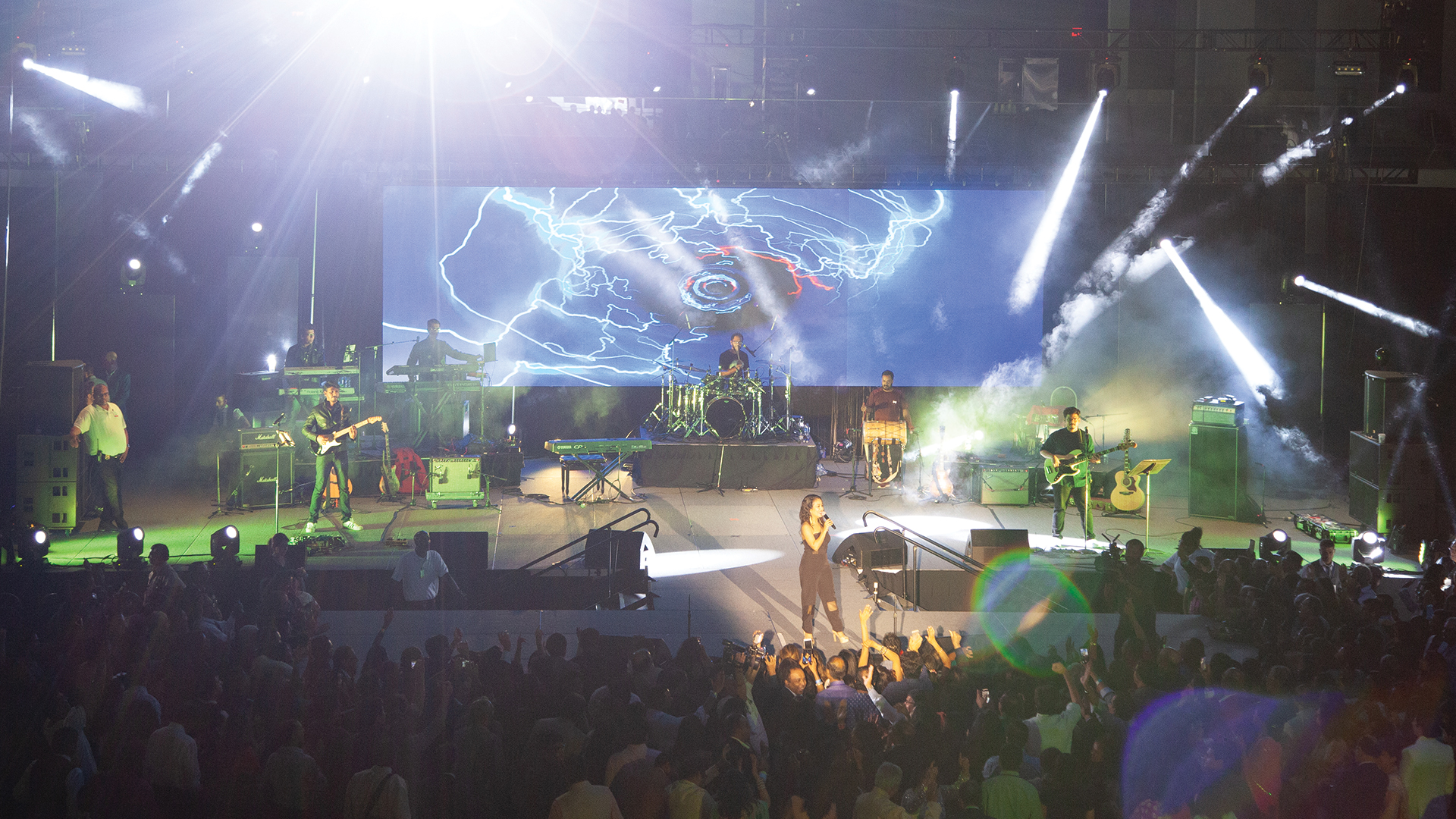
The promise of LED display technology includes faithful reproduction of source content—what you send should be what you see. Reality proves more entertaining. LED panels have demonstrated a remarkable talent for visual creativity, generating optical phenomena that range from subtle color shifts to dramatic geometric distortions that seem to exist in dimensions the original content never visited. These unintended effects have transformed straightforward productions into psychedelic experiences that nobody requested and many struggle to forget.
The Science of Unintended Vision
Understanding LED optical illusions requires understanding how human vision processes discrete light sources. An LED panel isn’t a continuous surface—it’s an array of individual emitters spaced at regular intervals. The pixel pitch (distance between LED centers) determines viewing distance requirements. Too close, and viewers perceive individual pixels. At optimal distance, the eye integrates these discrete sources into continuous imagery. But the integration process itself introduces potential for illusion.
The ROE Visual Black Marble BM4 floor panels popular for broadcast studios exemplify this tension. The 4.7mm pixel pitch creates seamless imagery from typical camera positions. But when wide-angle lenses capture grazing shots, the physical LED structure creates moiré patterns that ripple across the image—geometric interference between the camera sensor’s pixel grid and the LED array’s physical structure. The floor that looked solid to the human eye transforms into a shimmering, unstable surface on camera.
Refresh Rate Revelations
LED refresh rates create some of the most dramatic unintended visual effects. Modern LED panels refresh their display thousands of times per second, but this refresh isn’t instantaneous across the entire surface. The scan rate—how quickly the LED driver cycles through all pixels—interacts with camera shutter speeds to create horizontal bands that scroll across captured footage. The Brompton Tessera SX40 processor offers “camera mode” settings specifically to minimize this interaction, but achieving perfect synchronization requires matching camera frame rates, shutter angles, and LED driver timing with precision that often proves elusive.
One music video production discovered this phenomenon spectacularly during post-production. The director had filmed dancers against an Absen A3 Pro LED wall without consulting the video engineering team about camera settings. Every wide shot featured horizontal dark bands that swept through the background like digital rain. The LED wall was performing exactly as designed; the camera was capturing a truth invisible to human observers—the precise moment when individual scan lines had not yet refreshed while others had.
Color Space Hallucinations
The color gamut of LED panels—the range of colors they can produce—rarely matches the color space in which content was created. Graphics designed in Adobe RGB or DCI-P3 color spaces may display with shifted hues when rendered on LED panels optimized for different color volumes. The Samsung IF series indoor LED displays reproduce a wider color gamut than many content creation monitors, paradoxically making saturated colors appear more intense than designers intended.
The interaction between LED primary colors and human color perception creates specific illusion categories. Red, green, and blue LEDs emit light at specific wavelengths that don’t perfectly match the theoretical primaries used in color science. When these primaries mix to create secondary and tertiary colors, subtle shifts occur. A corporate logo’s precise Pantone color might display with a pink cast that no amount of adjustment can eliminate—the LED’s physical color primaries simply cannot produce that exact combination of wavelengths.
Viewing Angle Adventures
Viewing angle specifications define the cone within which LED panels maintain consistent brightness and color. Outside that cone, optical effects multiply. The Unilumin UTV III rental panels specify viewing angles of 160 degrees horizontal by 140 degrees vertical, but real-world performance varies with viewing position. Audience members at extreme angles may see dramatic color shifts, reduced brightness, or geometric distortions as the LED structure itself becomes visible.
A trade show installation demonstrated this effect memorably. The LED video wall positioned at the end of an exhibit hall looked spectacular from the main aisle. But attendees approaching from side corridors saw a completely different display—colors shifted toward blue, brightness fell dramatically, and the seamless imagery broke into visible vertical stripes as the LED louver structure became apparent at oblique angles. The same content appeared as two entirely different experiences depending on approach direction.
Motion Artifact Manifestations
Moving content on LED panels can generate motion artifacts that transform smooth video into stuttering, ghosting, or tearing visual experiences. The sample-and-hold characteristic of LED displays—each frame displays at constant brightness until the next frame arrives—creates motion blur perception even in content that contains no actual blur. Fast-moving objects leave ghost trails that exist only in human perception, as the eye tracks motion across a display that only updates at discrete intervals.
The Christie Velvet LED tiles used in high-end broadcast and virtual production offer extremely high refresh rates specifically to minimize motion artifacts. But even these premium products encounter limitations when content motion speeds exceed the display’s temporal resolution. Text scrolling across an LED wall might remain sharp or might smear into illegibility depending on scroll speed, font size, and the specific refresh characteristics of the installed panels.
Black Level Illusions
Black levels on LED panels present unique perceptual challenges. Even “off” LEDs emit some light due to ambient reflection and residual current through LED packages. The INFiLED ER series panels feature specialized black coatings to improve contrast ratios, but absolute black remains impossible. In dark content, this elevated black level creates a luminous quality that makes “space” scenes appear as gray voids rather than the inky blackness audiences expect.
The perception of black also depends on ambient lighting conditions. An LED wall displaying identical content in a dark room versus a brightly lit exhibit hall creates completely different visual experiences. The dark room emphasizes the elevated black level; the bright room makes those same blacks appear deeper by comparison. Productions designed under one lighting condition often look dramatically different under actual show conditions—an optical illusion of environment rather than technology.
The Multiview Paradox
Large LED installations assembled from multiple panel types or manufacturers can create visible inconsistencies that constitute their own category of optical illusion. A curved wall built from Leyard TW1.2 panels transitioning to ROE Visual CB3 panels might maintain pixel pitch consistency while exhibiting different color characteristics, black levels, and viewing angle behavior. The human eye perceives a continuous surface displaying discontinuous imagery—a cognitive dissonance that distracts from content.
Even panels from identical manufacturing batches can exhibit visible differences when assembled into large arrays. LED binning—the process of sorting LEDs by brightness and color characteristics—means that panels from different batches may fall into different bins. A video wall assembled from rental stock aggregated across multiple projects might show visible seams between panel groups, not from mechanical misalignment but from LED binning differences that create subtle but perceivable color zones.
Processing Chain Phantoms
The signal processing chain that delivers content to LED panels can introduce its own optical illusions. Each processing stage—media server, scaler, LED processor, receiving cards—makes decisions about color, scaling, and timing that accumulate into visible artifacts. The Novastar MCTRL660 PRO controller applies gamma correction, color temperature adjustment, and brightness limiting that transforms input signals. Content that looked perfect on the design workstation may display with crushed shadows, blown highlights, or color casts introduced by processing assumptions that don’t match content characteristics.
Scaling operations prove particularly problematic. Content rarely matches LED wall resolution exactly, requiring interpolation that fills pixels with values derived from surrounding pixels. The Barco ImagePRO-4K scaler offers sophisticated interpolation algorithms, but every algorithm makes assumptions about image content that may not apply. Text, graphics, and video each scale optimally with different algorithm choices. A single algorithm applied to mixed content produces visible artifacts in at least some content types—soft text, jagged graphics, or swimming video textures that exist nowhere in the source material.
Virtual Production Vexations
The emergence of LED virtual production stages has created entirely new categories of optical illusion. The disguise xR workflow renders real-time environments that must synchronize with camera motion tracking, creating in-camera visual effects that replace traditional green screen compositing. When this synchronization fails—even by milliseconds—actors appear to float against backgrounds that don’t move correctly with camera motion, creating uncanny valley effects that disturb viewers without their consciously understanding why.
The Sony Venice camera commonly used in virtual production captures LED panels with extraordinary detail, revealing artifacts invisible to human observers on set. The interaction between camera sensor design and LED emission characteristics can produce color fringing, aliasing patterns, and luminance inconsistencies that require extensive post-production correction or complete reshoots.
Managing the Illusions
Preventing unwanted optical illusions begins with understanding their sources. Test content that stresses potential problem areas: motion at various speeds, color gradients through the gamut, text at multiple sizes, and high-contrast patterns that reveal moiré potential. The video engineer who systematically evaluates these test patterns before loading show content catches problems when solutions remain possible.
Match processing settings to content characteristics. If the production involves broadcast, verify camera settings against LED processor configurations. If wide viewing angles are expected, evaluate panel performance at those angles and adjust content accordingly—perhaps reducing saturation at edges or avoiding critical color information where viewing angle degradation is worst. The content designer who understands LED display characteristics creates content that minimizes illusion potential rather than maximizing visual complexity that the display cannot faithfully reproduce.
LED panels creating optical illusions remind us that display technology involves continuous negotiation between source content, processing systems, and human perception. The illusions aren’t bugs—they’re features of the physics that make LED display possible. The production professional who understands these physics works with rather than against the technology, achieving visual results that might not match original intentions but at least avoid the spectacular failures that make lasting impressions on audiences and careers alike.
