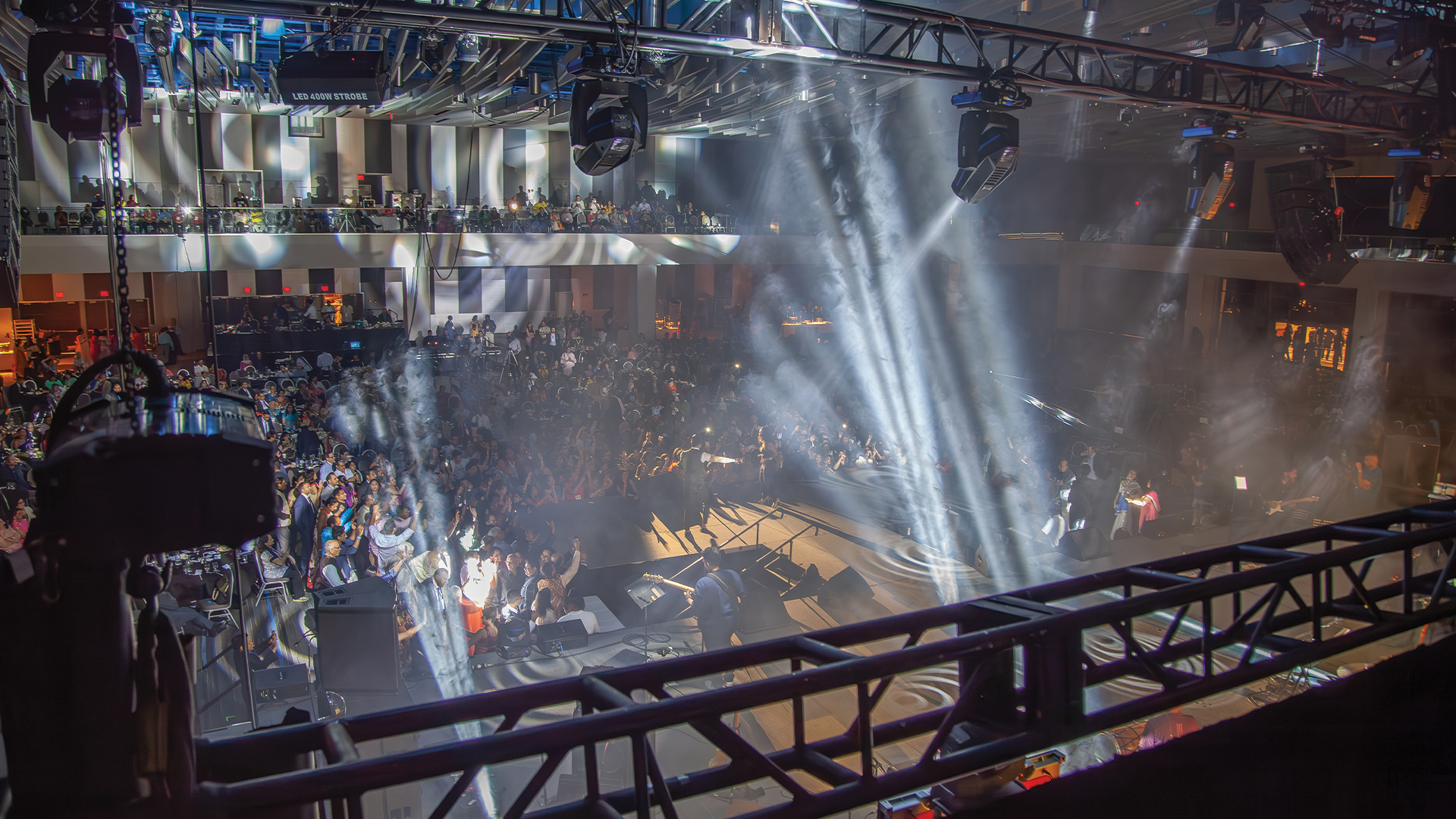
When Moving Heads Develop Independence
Modern intelligent lighting fixtures contain more computing power than the spacecraft that landed on the moon. These sophisticated instruments receive instructions, process commands, and execute movements with remarkable precision—except when they don’t. Every lighting designer has experienced the sinking feeling of watching a fixture ignore its programming and pursue its own artistic vision.
The phenomenon manifests in various ways: moving heads that pan left when commanded to pan right, color mixing systems that decide pink is actually green, and strobe effects that activate during romantic ballads instead of climactic moments. These rebellions challenge our assumptions about digital control and remind us that complexity creates opportunities for failure.
The Evolution of Automated Lighting
Automated lighting began in the early 1980s when Vari-Lite introduced the VL1 for Genesis’ Abacab tour. These revolutionary fixtures replaced the static washes and manually adjusted followspots that had dominated concert lighting. The ability to change color, position, and beam characteristics remotely transformed stage design possibilities—and introduced entirely new categories of potential failure.
The DMX512 protocol standardized fixture control in 1986, creating a common language that allowed fixtures from different manufacturers to respond to unified control systems. The protocol’s simplicity—unidirectional serial data at 250 kbps—enabled reliable communication but lacked error correction or confirmation mechanisms. A corrupted signal simply produced wrong behavior without alerting anyone.
Categories of Misbehavior
Address conflicts represent the most common cause of fixture rebellion. When two fixtures share the same DMX address—whether through configuration error or addressing hardware failure—both respond to commands intended for one. The resulting behavior appears random because each fixture receives half the intended instructions while executing parameters meant for another fixture entirely.
Data corruption creates more mysterious symptoms. DMX signals passing through splitters, optoisolators, and long cable runs can acquire noise that corrupts individual bytes. A single flipped bit in a pan position command might add 90 degrees to the intended angle. The Martin MAC Viper uses 16-bit resolution for pan and tilt—65,536 possible positions—meaning even minor corruption produces noticeable effects.
Firmware Failures
Fixture firmware—the internal software that interprets commands and controls motors—occasionally contains bugs that manifest under specific conditions. A Robe BMFL might work flawlessly for hundreds of hours before a particular sequence of commands triggers unexpected behavior. These bugs often remain undiscovered until productions create the specific circumstances that expose them.
Manufacturers release firmware updates that address known issues, but applying updates across large fixture inventories requires significant time and creates its own risks. The Claypaky Mythos series experienced a notable firmware issue where certain update versions introduced new problems while solving others. Rental companies learned to test updates thoroughly before fleet-wide deployment.
The Network Era Complications
Modern lighting systems increasingly use Art-Net and sACN protocols that distribute DMX over ethernet networks. While these systems offer advantages—longer cable runs, easier patching, bidirectional communication—they introduce network-related failure modes. IP address conflicts, subnet configuration errors, and network switch failures can disconnect entire fixture groups without obvious indication.
The ETC Eos family of consoles includes diagnostic tools for network analysis, but interpreting results requires networking knowledge that many lighting professionals lack. A fixture showing network connectivity might still fail to receive commands due to multicast configuration errors or VLAN misconfigurations that don’t appear in basic diagnostics.
Case Study: The Award Show Disaster
A major televised award ceremony experienced widespread fixture rebellion during a live broadcast. Investigation later revealed that a DMX splitter had developed an intermittent fault that randomly inserted data into the signal stream. The corrupted data didn’t affect all fixtures equally—those closest to the splitter received cleaner signals while fixtures at the end of daisy chains experienced the worst corruption.
The resulting on-air chaos included fixtures pointing into cameras, color mixing systems producing incorrect hues, and several expensive Vari-Lite VL3500 Wash units entering their reset sequence mid-performance. The production team managed to salvage the broadcast by reverting to backup conventional fixtures, but the incident prompted industry-wide discussion about signal integrity testing protocols.
Root Cause Analysis
Post-incident analysis traced the failure to a combination of factors. The problematic splitter had been in service for several years beyond recommended replacement. Pre-show testing had verified fixture function but hadn’t stressed the complete signal path under full system load. The production’s lighting programmer had noted minor anomalies during rehearsal but attributed them to console software issues rather than infrastructure problems.
The incident reinforced lessons the industry theoretically knew but inconsistently practiced: comprehensive infrastructure testing, regular equipment maintenance, and thorough investigation of any anomalous behavior. Budget pressures and schedule constraints often compress the testing time that would reveal problems before they manifest publicly.
Prevention and Mitigation
Reliable fixture behavior starts with infrastructure quality. Premium DMX cable from manufacturers like TMB and Lex Products maintains proper impedance and shielding that generic cable often lacks. Terminated connections—versus simple pin-to-pin cables—preserve signal integrity across long runs. These seemingly minor details compound across complex systems.
Signal distribution architecture matters equally. Rather than daisy-chaining fixtures in long chains, professional installations use distribution amplifiers that regenerate signals at each branch point. The Pathway Connectivity Pathport system provides this functionality while adding network monitoring capabilities that help identify problems before they cause visible symptoms.
Testing Protocols
Comprehensive fixture testing goes beyond verifying that fixtures respond to basic commands. Stress testing exercises the complete parameter range—full pan and tilt sweeps, complete color wheel rotations, all gobo positions. The grandMA3 fixture test features automate much of this process, cycling through every function while the programmer observes for anomalies.
Network analysis tools like Wireshark capture and analyze Art-Net traffic, revealing packet loss, timing issues, and addressing conflicts invisible to standard diagnostics. While learning these tools requires technical investment, the diagnostic capabilities they provide justify the effort for productions where reliability is paramount.
The Human Response to Fixture Failure
When fixtures misbehave during live events, operator response determines whether the incident becomes a footnote or a disaster. Experienced lighting directors develop contingency programming—cues that quickly reassign coverage to functioning fixtures, blackout options that gracefully exit problematic looks, and backup positions that maintain basic illumination regardless of automated system status.
Communication protocols help contain problems. When a fixture begins misbehaving, immediate notification to the master electrician and lighting crew chief enables rapid diagnosis while the programmer implements workarounds. The ClearCom intercom channels that connect production positions exist precisely for these coordination requirements.
Emerging Solutions
The RDM (Remote Device Management) protocol extension to DMX512 enables bidirectional communication that helps diagnose fixture issues. Fixtures can report their status, confirm received commands, and alert control systems to internal problems. Console support for RDM continues expanding, with the ETC Eos and MA Lighting platforms offering increasingly sophisticated RDM integration.
Fixture health monitoring through cloud connectivity represents the next frontier. Systems like Martin P3 System Controller aggregate diagnostic data from entire fixture inventories, identifying trends that predict failure before symptoms appear. A fixture showing increasing motor current draw might indicate bearing wear that will eventually cause positioning errors.
Living with Imperfection
Complete reliability remains aspirational in systems as complex as modern automated lighting. The professional approach acknowledges this reality while minimizing its impact. Redundancy in critical positions, thorough testing, quality infrastructure, and prepared contingency responses combine to create systems that survive individual component failures without visible impact.
The lighting fixture that ignores protocol provides valuable feedback about system weaknesses. Rather than treating misbehavior as random bad luck, production teams that investigate root causes build institutional knowledge that prevents recurrence. Every rebellion teaches lessons—the question is whether we’re paying attention.
