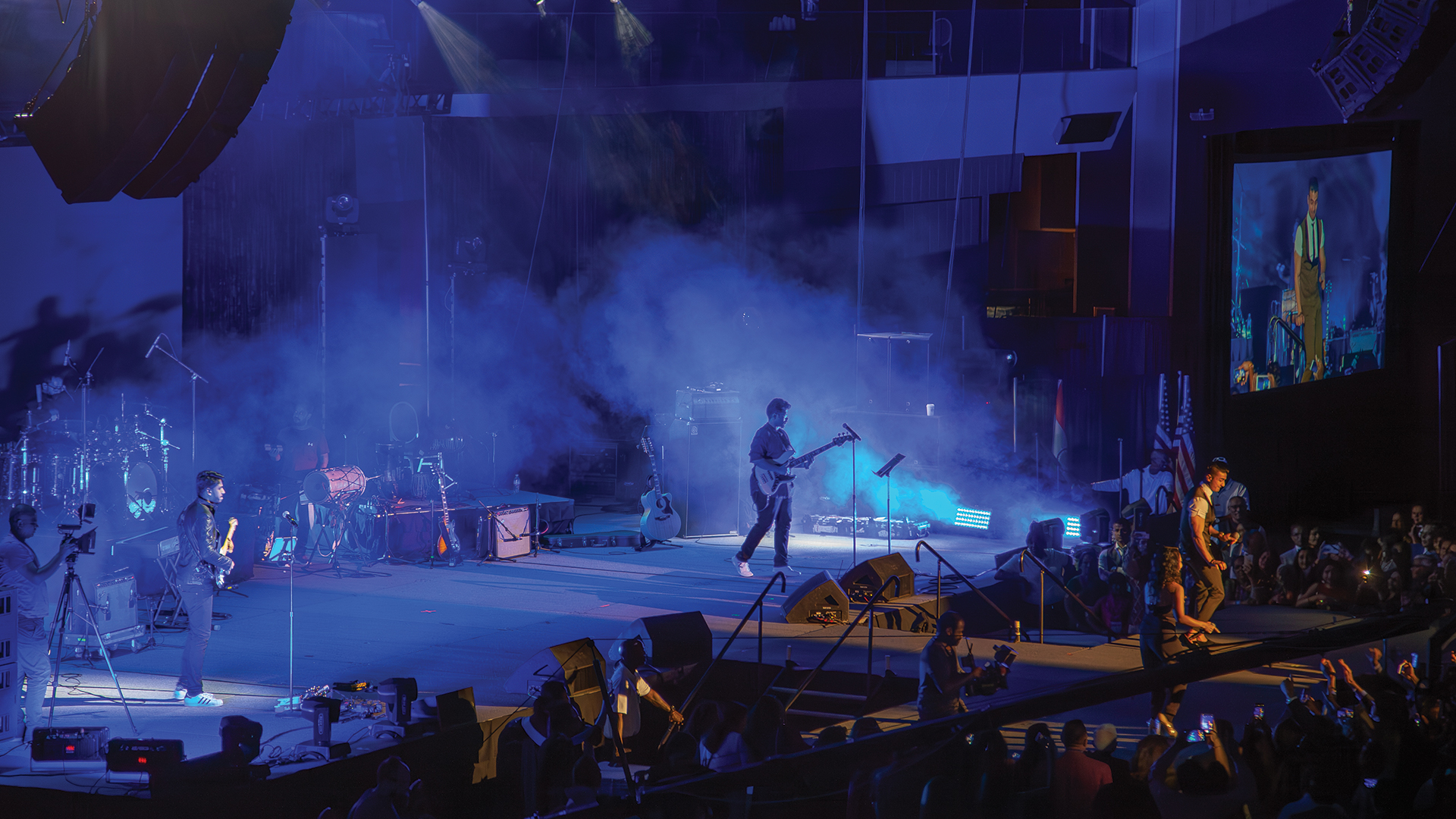
There’s a particular kind of chaos that only AV production veterans understand—the moment when a fog machine decides it’s done being a background player and wants the spotlight. We’ve all been there: the headliner is mid-ballad, the Martin Atomic 3000 strobes are pulsing in perfect sync, and suddenly the entire venue looks like the inside of a washing machine filled with cotton candy.
When Atmosphere Equipment Develops Ambition
The MDG ATMe is an industry workhorse—a gorgeous piece of German engineering that produces crystalline haze capable of making any lighting design look like it was blessed by the gods of photons themselves. But even the finest machinery has days when it feels underappreciated. I remember a 2019 corporate gala in Chicago where our perfectly calibrated MDG decided that the CEO’s keynote speech wasn’t dramatic enough. The DMX signal from our grandMA3 console said 15% output. The machine heard 150%.
Within ninety seconds, the speaker had vanished. Not metaphorically—literally disappeared into a cloud so thick that our IMAG cameras couldn’t find him. The Sony HDC-4300 operators were zooming frantically, but all they captured was the existential void of haze particles dancing in the beam of our Claypaky Sharpy fixtures.
A Brief History of Theatrical Smoke
The relationship between performers and artificial atmosphere dates back centuries. In 1882, the Savoy Theatre in London became the first public building lit entirely by electricity, and producers immediately realized that bare beams looked terrible without something to catch the light. Early solutions included burning lycopodium powder (highly flammable, occasionally fatal) and releasing actual smoke from heated oil (which smelled approximately like a burning tire factory had married a perfume counter).
The modern glycol-based fog fluid emerged in the 1970s, pioneered by companies that would eventually become giants like Rosco and Ultratec. These formulations transformed theatrical production, offering consistent output without the side effects of their predecessors (such as audience members coughing up their lungs or spontaneous combustion).
The Copenhagen Incident of 2017
Ask any tour manager about fog machine failures, and eventually someone will mention Copenhagen. The story has achieved mythical status in production circles, though the details shift depending on who’s telling it. The verified facts: a major arena tour, a JEM ZR44 Hi-Mass unit, and a thermostat that experienced what engineers diplomatically call ‘thermal runaway.’
The ZR44 is designed for stadium-scale productions—it outputs fog like a angry dragon with a grudge. When functioning correctly, it creates magnificent walls of atmosphere that make beam lighting look transcendent. When malfunctioning, it creates conditions that would make a London pea-souper look like a pleasant spring morning.
The production team had approximately forty-five seconds between realizing something was wrong and complete visual whiteout. Their Robe MegaPointe fixtures became useless—every beam terminated about three feet from the lens, creating a bizarre halo effect that made the stage look like it was surrounded by glowing orbs. The follow spot operators gave up entirely, since following a performer you cannot see presents certain logistical challenges.
Modern Solutions and Preventive Measures
Today’s atmosphere control systems offer significantly more safeguards than their predecessors. The MDG theONE features integrated sensors that monitor output density in real-time, theoretically preventing runaway scenarios. The Ultratec Radiance hazer includes programmable limits and network connectivity for remote monitoring.
Smart integration with lighting control software has also improved. Running fog machines through MA Lighting’s grandMA series or ETC’s Eos platform allows for coordinated cues that balance atmosphere density against visibility requirements. Some designers program automatic cutoff triggers—if haze density exceeds a threshold, the system automatically reduces output.
Practical Tips for Fog Management
After decades of collective industry experience with atmospheric equipment developing starring ambitions, several best practices have emerged. First, always carry backup DMX terminators and verify your signal chain before every show. A surprising number of fog machine rebellions trace back to corrupted DMX data—the machine isn’t malfunctioning; it’s following instructions from digital noise.
Second, temperature matters more than most technicians realize. Glycol-based fog fluid behaves differently at varying temperatures—cold venues produce denser output, while hot environments may cause fluid to vaporize prematurely. Professional productions often include venue climate monitoring in their pre-show protocols.
Third, know your fluid. Not all fog juice is created equal. High-density fluid in a machine calibrated for standard output will produce dramatically different results. Mixing brands can cause chemical reactions that affect consistency. Stick with manufacturer recommendations, and if you must substitute, test extensively before showtime.
The Art of Controlled Chaos
Here’s the thing about fog machine incidents—they make for great stories precisely because they reveal the beautiful fragility of live production. Every show is a negotiation between human intention and equipment personality. The best production teams don’t just prevent disasters; they develop an instinct for reading their equipment’s mood.
That MDG ATMe in Chicago? Turned out a firmware update had introduced a bug in the DMX interpretation algorithm. The machine wasn’t rebellious—it was confused. The Copenhagen ZR44? Thermal paste failure in the heat exchanger, completely undetectable without disassembly. These machines don’t malfunction out of spite; they malfunction because complex systems operating under demanding conditions sometimes encounter edge cases that nobody anticipated.
The AV industry has learned to embrace this uncertainty. Redundant systems, comprehensive backups, and crews trained to improvise have become standard. But secretly, I think we all love when the fog machine decides it’s the star. Those moments remind us why live production exists—because anything can happen, and somehow, we make it work anyway.
The next time your hazer starts outputting like it’s auditioning for a horror movie, remember: it’s not a malfunction. It’s a performance. And in the grand theater of live events, even the equipment deserves its moment in the spotlight—even if that spotlight is completely obscured by the equipment’s own output.
