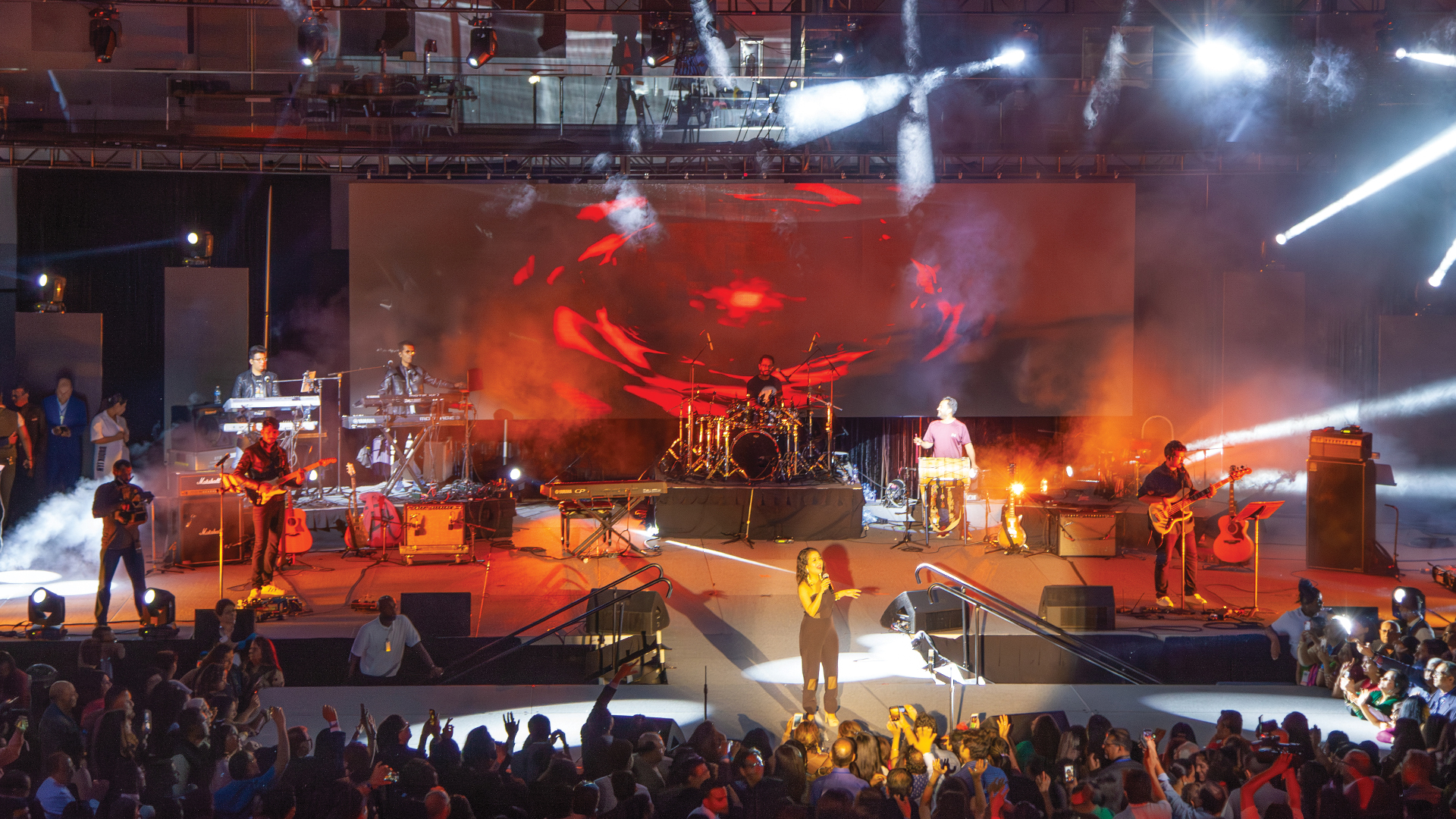
The moment a wireless LED fixture eliminated the last cable crossing a performance space, production design entered a new era. Astera — the Munich-based manufacturer that turned cordless professional lighting from novelty to necessity — has become one of the most discussed brands in global AV production circles. Their fixtures appear at intimate corporate dinners in Hong Kong, multi-day music festivals in the Nevada desert, luxury fashion shows in Milan, and broadcast specials in Los Angeles. Understanding the technology and business logic behind Astera’s rise explains a great deal about where event production is heading.
The Origins of the Wireless LED Revolution
Early attempts at battery-powered professional LED fixtures suffered from predictable limitations: short runtime, poor colour fidelity, and inadequate brightness for professional applications. The market accepted these compromises for informal or architectural applications but rejected them for serious event production. Astera’s founding team, led by Norbert Eckstein, attacked these limitations methodically from the company’s inception in 2015. Their first breakout product — the Astera AX1 Pixel Tube — demonstrated that a cable-free professional fixture could deliver RGBW colour output with enough accuracy for broadcast, enough runtime for a full event day, and enough physical durability for touring.
The AX1’s success came not just from the hardware specifications but from the AsteraApp wireless DMX control system that integrated with it. Rather than requiring dedicated wireless DMX transmitters and complex address mapping, Astera developed a Bluetooth LE-based control ecosystem that allowed event programmers to assign, control, and monitor entire fixture inventories from a tablet. This integration of hardware and software intelligence into a coherent operational package set Astera apart from competitors who produced good individual fixtures but poor ecosystem solutions.
The Core Astera Fixture Range: Titanfall Through Helios
Astera’s product lineup has expanded significantly since the AX1, with each product addressing specific production niches. The Astera Titan Tube became the touring industry’s go-to for pixel-mapped video content on cylindrical surfaces — its 16 individually addressable RGBW pixel zones and 12-hour battery runtime making it suitable for overnight outdoor activations without power infrastructure. The Astera AX5 TriplePar brought wireless battery par lighting into corporate event production with colour accuracy sufficient for branding applications, replacing traditional battery packs and power cable runs with a cleaner, faster deployment workflow.
The Astera Helios and Hyperion Tube represent Astera’s push into higher-intensity applications. The Helios, with its 60-watt LED engine and wireless DMX via AsteraApp or ArtNet/sACN bridging, competes directly with traditional cable-powered par fixtures in brightness applications — removing the last practical justification for cabled solutions in many corporate and event contexts. The Hyperion Tube’s 2-metre length and 360-degree pixel output opened entirely new set design vocabularies for concerts, award shows, and broadcast productions seeking dynamic architectural lighting elements without conduit infrastructure.
Corporate Events: Where Astera Changed the Deployment Model
In corporate event production, the labour cost of cable deployment, power distribution, and cable concealment has historically consumed 30–40% of lighting budgets on table-based or architectural installations. A formal dinner for 500 with custom table centrepiece lighting might require kilometres of low-voltage cable, dedicated distribution hardware, and hours of labour for installation and strike. Astera wireless fixtures collapsed this model: the same event now uses battery-powered Titan Tubes or AX5 units placed directly on tables, controlled via a single AsteraApp operator position, with zero power infrastructure requirement beyond the fixtures themselves.
The brand value implications extend beyond labour cost. A production team deploying Astera fixtures can change colour palettes, intensity levels, and dynamic effects in real time from a tablet during an event — responding to agenda changes, brand presentation phases, or VIP arrival protocols without physical intervention. This programmable flexibility was previously available only through expensive, infrastructure-heavy systems; Astera democratised it to the point where a single skilled operator with a grandMA3 onPC session and Astera’s DMX app interface can manage hundreds of wireless fixtures across a complex event environment.
Music and Touring: Astera on the Road
The touring adoption of Astera fixtures accelerated dramatically from 2018 onward, as lighting designers for mid-tier and major touring artists recognised the set design freedom wireless fixtures enabled. Floor lighting positions that previously required cable runs to power distribution points could now be placed on stage at any location — inside props, on moving scenic elements, inside transparent panels — without structural cable management. Productions for artists including those in the EDM, pop, and rock touring markets integrated Astera Titan Tubes as central visual elements, using pixel-mapping software within grandMA3 or Resolume Avenue to drive video content across tube arrays.
The wireless range of Astera fixtures — rated at 30+ metres in open environments via their proprietary AsteraApp protocol, extendable to 100+ metres with AsteraBox wireless transmitters — is sufficient for most touring stage configurations. For larger stadium productions, hybrid deployments using AsteraBox units at multiple stage positions create overlapping wireless coverage zones ensuring 100% signal reliability across even the most complex stage geometry.
Integration With Mainstream Lighting Control Ecosystems
Astera’s decision to support both their proprietary AsteraApp ecosystem and standard DMX512, Art-Net, and sACN protocols via their AsteraBox interface was commercially shrewd. Lighting designers and programmers operating grandMA3, Chamsys MagicQ, or ETC Eos consoles can integrate Astera fixtures into existing show files without changing their programming workflow — the AsteraBox simply translates standard protocol commands into Astera’s wireless universe. This interoperability eliminated the adoption barrier for programmers invested in other ecosystems and accelerated Astera’s penetration into professional touring and event markets.
From mountain-top brand activations to sold-out arena tours, Astera wireless LED technology has removed the cable as a limiting factor in professional event production. For the AV professionals who deploy these systems, the result is faster builds, more ambitious designs, and lighting possibilities that simply did not exist a decade ago.
